Age Regression Photo Software
I want to find a site that progresses the age of anyone on photographs, for free. Canon eos 400d driver for mac.
I just want to upload a photo, then type in the following in the following fields:
AGE IN PHOTO: ##
Age-progression software lets you see your child as an adult - and it's surprisingly accurate Researchers have developed software that can predict aging It shows how a baby will look from birth up. We can Age Progress from and to Any Age! If scanning photos, scan them at 600dpi & Save them as.Jpeg files; When Uploading, Please name each photo with the name & age of the subject in the photo.For Example (Dadage36.jpg) What type of photos are preferred: The best type of photos are Professionally taken, Studio or School photos. Age Regression Generator. You're stricken by a sudden rejuvenation. By how much and how it happened, and why enter your name to find out! 3 regression TF.
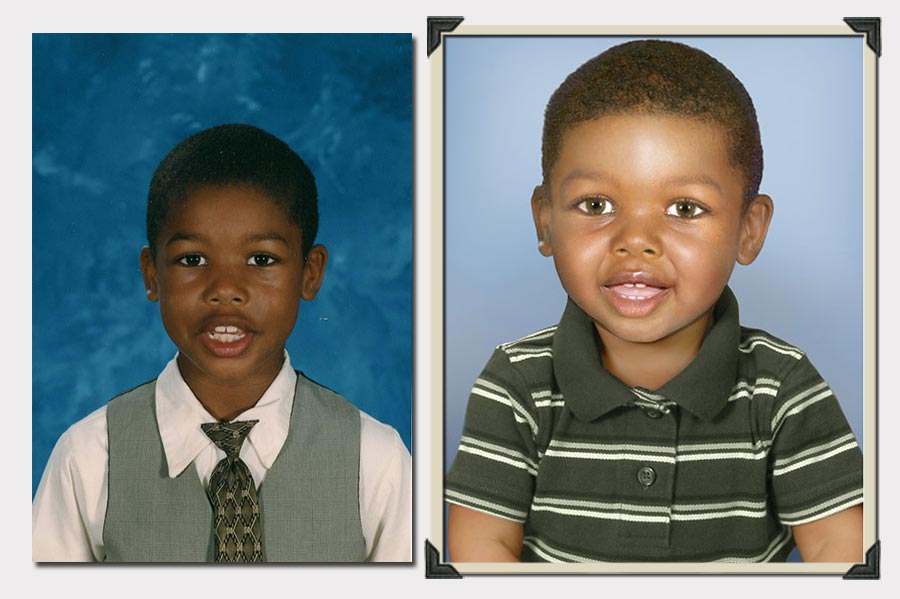
The result is a Photo Realistic Age Regression of what someone may have looked like in a best case scenario! We produce a very high quality Photo Realistic Age Regression. Turnaround is currently about 14-30 days for Age Regressions. Custom clothing, hair or jewelry requests may incur additional charges. You can certainly use any of image editing tool such as Photoshop or GIMP (which is free) to add age provided you know proper step to add age. And Photoshop do have commercial software to add age etc. But if you are looking for free easy one, Try this type of app. Ultimately, their software ended up with thousands of photos on file, each used in some capacity, depending on age and gender, to create a composite image of the target subject as he or she ages. An algorithm the team developed culls the correct details from each bracket written into the software and assembles them into a full image, adjusted.
DESIRED PROGRESSED AGE: ##
Click to progress!
When I read about the 2038 Problem, I realized that it’s my youngest sister’s 43rd birthday. There’s even a Facebook Group on Y2k38:
Or you can just read Wikipedia: http://en.wikipedia.org/wiki/Year_2038_problem
Therefore, I wanted to see what she’ll look like in 28 years.
So what websites progress visual ages for free?
(Anyway, you can read on age progression here: http://en.wikipedia.org/wiki/Age_progression)
3 Answers
Maybe try this website. I haven’t tried it myself so I’m not sure how it’ll turn out.
@eeveegurl Even though the results don’t look as professional as the ones we see on Unsolved Mysteries, America’s Most Wanted, or The National Center for Missing & Exploited Children, at least this is a step in the right direction.
When I upload pictures of myself as a child and select “Teenager” as the transformation option, the end-result looks somewhat accurate.
Instead of the five age groups of just “baby, child, teenager, young adult, older adult,” I wish we could enter the starting age and the desired age. That could be more accurate.
But hey, at least this is something like what I’m looking for. Thanks a lot.
thanks @eeveegurl, i love that site, been playin around with it ever since i read your post.
Answer this question
This question is in the General Section. Responses must be helpful and on-topic.
April 9, 2014
It’s a guessing game parents like to ponder: What will my child look like when she grows up? A computer could now answer the question in less than a minute.
University of Washington researchers have developed software that automatically generates images of a young child’s face as it ages through a lifetime. The technique is the first fully automated approach for aging babies to adults that works with variable lighting, expressions and poses.
Using one photo of a 3-year-old, the software automatically renders images of his face at multiple ages while keeping his identity (and the milk moustache).U of Washington
“Aging photos of very young children from a single photo is considered the most difficult of all scenarios, so we wanted to focus specifically on this very challenging case,” said Ira Kemelmacher-Shlizerman, a UW assistant professor of computer science and engineering. “We took photos of children in completely unrestrained conditions and found that our method works remarkably well.”
The research team has posted a paper on the new technique and will present its findings at the June IEEE Computer Vision and Pattern Recognition conference in Columbus, Ohio.
The shape and appearance of a baby’s face – and variety of expressions – often change drastically by adulthood, making it hard to model and predict that change. This technique leverages the average of thousands of faces of the same age and gender, then calculates the visual changes between groups as they age to apply those changes to a new person’s face.
More specifically, the software determines the average pixel arrangement from thousands of random Internet photos of faces in different age and gender brackets. An algorithm then finds correspondences between the averages from each bracket and calculates the average change in facial shape and appearance between ages. These changes are then applied to a new child’s photo to predict how she or he will appear for any subsequent age up to 80. /yamaha-kx8-drivers-for-mac.html.
The researchers tested their rendered images against those of 82 actual people photographed over a span of years. In an experiment asking random users to identify the correct aged photo for each example, they found that users picked the automatically rendered photos about as often as the real-life ones.
A single photo of a child (far left) is age progressed (left in each pair) and compared to actual photos of the same person at the corresponding age (right in each pair).U of Washington
“Our extensive user studies demonstrated age progression results that are so convincing that people can’t distinguish them from reality,” said co-author Steven Seitz, a UW professor of computer science and engineering. “When shown images of an age-progressed child photo and a photo of the same person as an adult, people are unable to reliably identify which one is the real photo.”
Real-life photos of children are difficult to age-progress, partly due to variable lighting, shadows, funny expressions and even milk moustaches. To compensate for these effects, the algorithm first automatically corrects for tilted faces, turned heads and inconsistent lighting, then applies the computed shape and appearance changes to the new child’s face.
Perhaps the most common application of age progression work is for rendering older versions of missing children. These renderings usually are created manually by an artist who uses photos of the child as well as family members, and editing software to account for common changes to a child’s face as it ages, including vertical stretching, wrinkles and a longer nose.
But this process takes time, and it’s significantly harder to produce an accurate image for children younger than age 5, when facial features more closely resemble that of a baby.
- In each of these morphs, the left image is the starting input photo and the right image will transform to age 80 to show the automatic aging process.
The automatic age-progression software can run on a standard computer and takes about 30 seconds to generate results for one face. While this method considered gender and age, the research team that also includes UW doctoral student Supasorn Suwajanakorn hopes to incorporate other identifiers such as ethnicity, and cosmetic factors such as hair whitening and wrinkles to build a robust enough method for representing every human face.
Age Regression Photo Manipulation Software

“I’m really interested in trying to find some representation of everyone in the world by leveraging the massive amounts of captured face photos,” Kemelmacher-Shlizerman said. “The aging process is one of many dimensions to consider.”
This research was funded by Google and Intel Corp.
###
For more information, contact Kemelmacher-Shlizerman at kemelmi@cs.washington.edu or 206-616-0621.